Table of Contents
- Reasons Fingerprints Are Rejected: The 8 Most Common Causes
- How to Improve Fingerprint Quality Before Your Appointment
- Step-by-Step: What to Do at the Fingerprinting Appointment
- Ink Cards vs. Live Scan: Which Method Reduces Rejection Risk?
- What to Do After Fingerprint Rejection: Your Next Steps
- How Long Fingerprint Resubmission Takes and What to Expect
- When Fingerprints Are Naturally Hard to Capture (and What Helps)
- Conclusion: Getting It Right the First Time
- Frequently Asked Questions
Last Updated: October 12, 2026
Reasons Fingerprints Are Rejected: The 8 Most Common Causes
Rejected fingerprinting almost always traces back to eight fixable problems: smudged or faint prints, dry or oily skin, worn ridges, dirty hands, the wrong form, poor rolling technique, damaged fingers, and equipment errors. At San Diego Live Scan, we see these issues every week, and nearly all are preventable before you sit down at the scanner.
A fingerprint submission is the set of rolled and flat impressions taken from your fingers and sent to a state or federal agency for a background check. When the agency cannot read those ridges clearly, it sends the submission back.
Here is what actually causes most rejections.
- Smudged prints from too much ink or pressure
- Faint prints from too little ink or dry skin
- Partial impressions when a finger slips mid-roll
Print Quality Problems: Smudged, Faint, or Partial Impressions
Print quality problems are the number one driver of rejected fingerprinting. An examiner needs clear, unbroken ridges across the whole finger, and anything less gets flagged. Smudged prints come from sliding or pressing too hard, faint prints from too little ink or dry skin, and partial impressions from rolling too fast or lifting early.
Never let anyone re-ink a finger without cleaning it first. Layering fresh ink over a smudged print creates a darker mess that reads even worse than the original.
Applicant-Side Issues: Dry Skin, Moisture, and Worn Ridges
Applicant-side issues are things you control before the appointment. Dry skin, oily skin, and worn ridges all change how ink or a scanner reads your fingers. Dry fingertips crack and flake, breaking up the ridge pattern; oily fingers leave gaps where ink will not stick; worn ridges from manual work, gardening, or guitar playing flatten the lines an examiner needs.
How to Improve Fingerprint Quality Before Your Appointment
Improving fingerprint quality starts days before your appointment. Hydration and clean, undamaged skin do more than any technique trick at the scanner.
Start with these habits:
- Drink water in the 24 hours before your visit
- Moisturize hands at night, not the morning of
- Skip lotion, oil, and sunscreen on appointment day
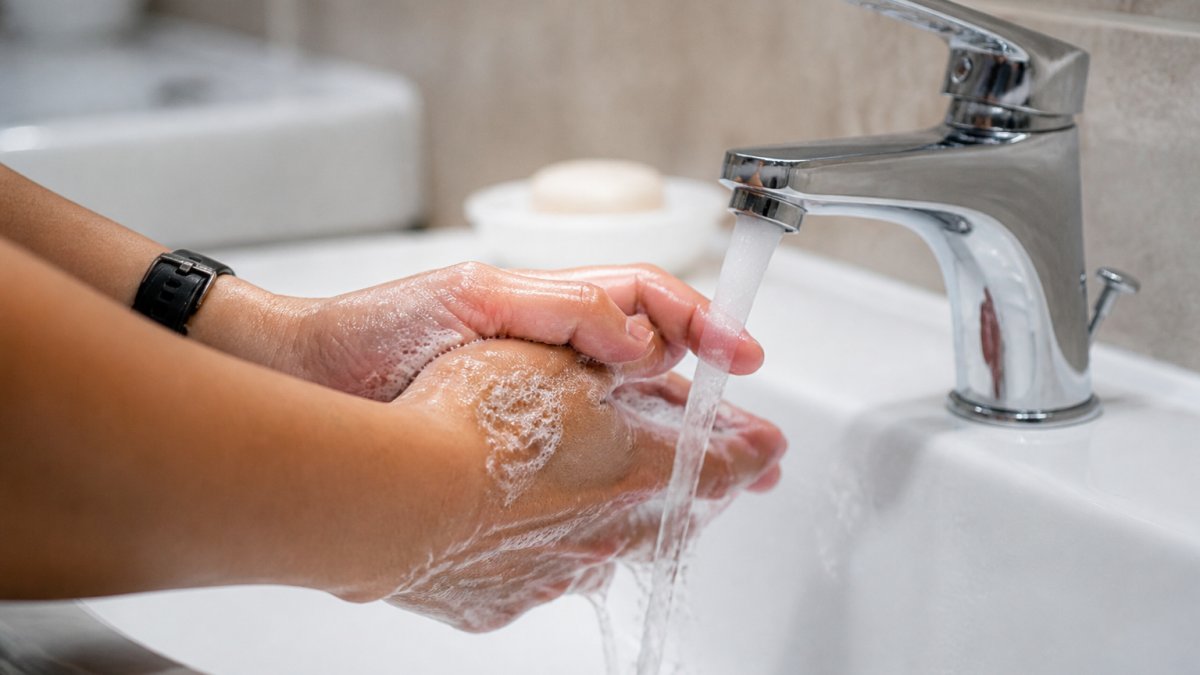
Pre-Appointment Hand Care Checklist
Use this checklist the day before and the day of your appointment:
- Drink plenty of water for 24 hours
- Moisturize hands the night before
- Wash hands with mild soap and dry them fully
A technician who knows about a healing cut can adjust the roll to capture clean ridges around it.
Step-by-Step: What to Do at the Fingerprinting Appointment
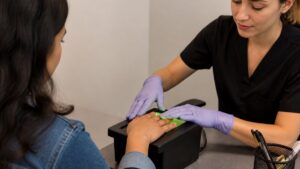
At the appointment, keep your hands clean, relax your fingers, and follow the technician’s directions. Most rejected fingerprinting we see comes from tense hands and rushed rolls, not bad equipment.
Here is how a good appointment should go:
- Confirm the correct form and agency before anything starts.
- Clean your hands with the wipes provided.
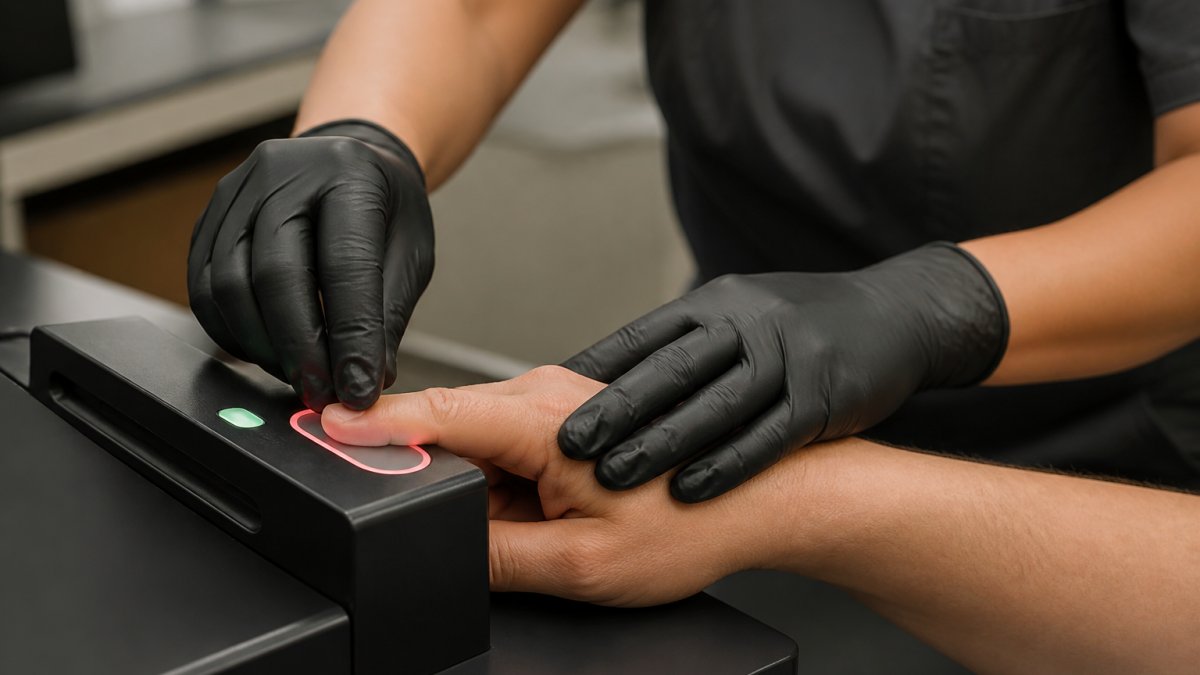
- Let the technician guide each finger, one at a time.
- Roll from one edge of the finger to the other, not straight down.
- Hold still for flat impressions when asked.
- Review the prints on screen or card before you leave.
- Ask for a reprint on the spot if anything looks faint.
That review is where you catch problems early, if a print looks weak, say so before you leave.
Ask the technician to redo any finger that looks faint or broken before you leave. Fixing it on site takes two minutes. Fixing it after a rejection takes weeks.
Ink Cards vs. Live Scan: Which Method Reduces Rejection Risk?
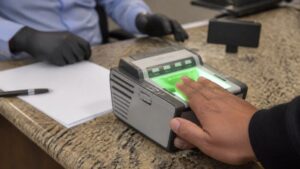
Live scan reduces rejection risk compared to ink cards because the scanner checks print quality in real time and lets the technician retake a finger immediately. Once ink is on paper, you cannot fix a bad print without starting a new card. But the more important question is which method the receiving agency will actually accept, requirements vary by agency and submission method, and applying the wrong guidance is itself a common cause of rejection.
| Factor | Ink Cards | Live Scan |
|---|---|---|
| Quality check | After mailing | Instant on screen |
| Retake option | New card needed | Immediate redo |
| Smudge risk | High | Low |
| Processing speed | Slower | Faster |
| Best for | Remote or out-of-state requests | Most local background checks |
How Requirements Differ by Agency and Submission Method
The requesting agency, not the fingerprinting provider, dictates which method is acceptable. Before you book, confirm three things with the agency that requested the prints:
- Accepted method: Some agencies accept only electronic submissions, some accept only ink cards, and some accept either.
- Form or agency identifier: Electronic submissions often require an agency-specific code (sometimes called an ORI or agency ID). Ink submissions often require a specific card stock or form number.
- Destination: Whether the prints go to a state repository, an FBI-approved channeler, or the requesting agency directly changes what the technician needs to submit.
A frequent failure: an applicant gets ink-rolled locally for an out-of-state license, only to learn the licensing board requires electronic submission through an approved vendor. The prints were fine, the method was wrong.
Matching the Method to Your Situation
- Local employment, licensing, or volunteer checks: Live scan is usually the default because the agency accepts electronic results and the technician can catch bad prints on the spot.
- Out-of-state or remote requests: Ink cards are often required because the receiving agency cannot access a local electronic system. In that case, a trained technician matters even more, because there is no second chance on the same card.
- Agency that specifies a vendor or code: Follow the agency’s instructions exactly, even if a different method would be more convenient. Convenience does not override acceptance requirements.
Ask the requesting agency for its written fingerprinting instructions before your appointment. Bring that document with you. A technician who can see the agency code, form number, and accepted method will not have to guess.
When in doubt, call the receiving agency and ask which method it accepts and what form or code it requires. Those two answers prevent most method-related rejections.
What to Do After Fingerprint Rejection: Your Next Steps
After a rejection, do not panic or guess. Read the rejection notice first, it tells you why the prints failed and what the agency needs next. Match the stated reason to the corrective action below.
Troubleshooting by Rejection Reason
| Rejection reason on notice | What it usually means | Corrective action |
|---|---|---|
| Poor print quality / unreadable | Faint, smudged, or broken ridges | Hydrate and moisturize for 24 hours before reprint; ask technician to focus on flagged fingers |
| Missing fingers or partial set | A finger was skipped or a roll failed | Confirm all required fingers are captured; note any amputations or bandages for the technician |
| Form or agency code error | Wrong form number or missing agency identifier | Contact the requesting agency for the correct form or code before reprinting |
| Mismatched ID or information | Name, date of birth, or ID did not match the request | Verify spelling and identifiers against the agency’s records |
| Illegible due to skin condition | Worn ridges, scars, or active skin issues | Ask the agency about alternatives before reprinting; see the hard-to-capture section below |
Your Reprint Workflow
- Read the rejection notice and identify the stated reason.
- Check whether the agency wants a reprint or a brand-new submission.
- Fix the underlying issue before you return.
- Bring the rejection notice to your reprint appointment.
- Ask the technician to focus on the flagged fingers.
- Review the new prints before you leave.
If the notice says the prints were too faint, hydrate and moisturize before you go back. If it says the form was wrong, confirm the correct form number with the requesting agency first.
What to Do After Repeated Rejections
Two or more rejections on the same submission is a signal to change your approach, not repeat it. Applicants often keep reprinting without addressing the root cause, a skin condition, a form mismatch, or a method the agency does not accept.
Escalation steps that practitioners commonly recommend:
- Ask the agency what alternatives exist. Some agencies accept a name check, a manual card review, or a waiver process when prints cannot be captured. You will not know unless you ask.
- Request a manual or alternative capture. For applicants with worn ridges, scars, or skin conditions, some agencies allow additional documentation or a different capture method.
- Document your attempts. Keep copies of rejection notices and reprint receipts. If you need to escalate, a paper trail shows you followed the process.
Do not keep reprinting the same way and hoping for a different result. Each rejection adds weeks to your timeline. If the first reprint fails, stop and call the requesting agency before scheduling another appointment.
Questions to Ask the Requesting Agency
- What exactly caused the rejection?
- Do you want a reprint or a new submission?
- Is there an alternative process if my prints cannot be captured clearly?
Those answers turn a vague rejection into a specific plan, the reprint is quick, but guessing causes delay.
How Long Fingerprint Resubmission Takes and What to Expect
Fingerprint resubmission typically adds a few weeks to your background check timeline, depending on the agency and how quickly you return for a reprint. The reprint takes minutes; the waiting happens on the agency side.
What to expect:
- Reprint appointment: usually same day or next day
- New submission sent to the agency: within a day or two
- Agency review: varies widely by agency and workload
The fastest way to shorten this is to reprint quickly and get the prints right the second time. Delay is the real cost of a rejection, not the reprint itself.
Speed after a rejection comes from acting fast and fixing the cause. The reprint is quick. Waiting to schedule it is what stretches the timeline.
When Fingerprints Are Naturally Hard to Capture (and What Helps)
Some people simply have hard-to-capture fingerprints. Age, occupation, and skin condition all play a role.
Common hard-to-capture situations:
- Worn ridges from years of manual labor
- Very dry or cracked skin in winter months
- Eczema or psoriasis on the fingertips
For these cases, hydration and moisturizing help, but technique matters more. An experienced technician can adjust pressure, angle, and roll speed to pull a readable print from difficult fingers, which is why a trained provider beats a self-service kiosk for worn or damaged ridges.
Conclusion: Getting It Right the First Time
Rejected fingerprinting costs you time, not money, and time is the part you cannot get back when a job offer is on the line. Clean hands, hydrated skin, the right form, and a skilled technician prevent almost every rejection we see.
At San Diego Live Scan, we have helped applicants across the region get clean, readable prints since 2010.
Find a Location and get your fingerprints done right the first time.
Frequently Asked Questions
Can fingerprints be rejected even if I have no criminal record?
Yes. Rejection is almost never about your record. It happens when the scanner or card cannot read your finger ridges clearly enough to produce a match. Common causes include dry or cracked skin, sweaty fingertips, calluses, scars, or poor rolling technique. The FBI and state agencies reject prints that fail quality thresholds, not prints that show a clean record. Fixing hand condition and using an experienced technician resolves most of these cases on the first resubmission.
What happens if my fingerprints are rejected more than once?
After two or three rejections, agencies may require you to submit a different type of fingerprint card, use a specific alternative method, or provide additional identity documentation. Some applicants are asked to visit a law enforcement agency for manual ink rolling. The key is to change something between attempts: improve skin hydration, try a different finger if one is damaged, or switch to a provider who uses newer scanning equipment. Repeated identical submissions usually produce identical rejections.
How can I improve the quality of my fingerprints before a Live Scan?
Start hydrating your hands two to three days before your appointment. Use a glycerin-based moisturizer at night, drink plenty of water, and avoid harsh soaps or hand sanitizers that strip oils. On the day of your appointment, wash and dry your hands thoroughly, then keep them warm. If you work with your hands and have calluses or dry patches, moisturize consistently for several days. Tell the technician about any scars, bandages, or skin conditions so they can adjust their technique.
How long does it take to find out if fingerprints were rejected?
Most rejections are reported within 24 to 72 hours for electronic submissions, though some agencies take up to two weeks. Ink cards mailed to the FBI typically take longer, often two to six weeks before you receive a rejection notice. Once rejected, you must return for a new capture, and the resubmission processing clock restarts. Ask your provider how they notify applicants and whether they offer a reprint at no extra charge, which saves both time and money.