
Table of Contents
- FBI Background Check Requirements 2026: What Changed
- What Is an FBI Identity History Summary Check?
- FBI Background Check Processing Time and Submission Steps
- FBI Background Check Requirements for Immigration Cases
- FBI Background Check for Professional Licensing and Employment
- Fixing Errors, Expungement, and Your Rights Under the FCRA
- Conclusion: Your Next Steps for a Smooth FBI Background Check
- Frequently Asked Questions
Last Updated: October 9, 2026
FBI Background Check Requirements 2026: What Changed
The FBI background check requirements in 2026 hinge on one distinction: digital fingerprints submitted through an approved channel are now the default, and paper ink cards are the exception.
An FBI Identity History Summary is a record of your arrests and convictions maintained by the FBI’s Criminal Justice Information Services Division, not a clearance certificate that declares you innocent.
Here is what the 2026 requirements actually demand, and where most guides get it wrong.
Digital Fingerprints vs Ink Cards: Which Submission Method Works
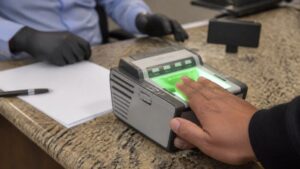
Digital fingerprint capture is the fastest route for most applicants because prints transmit electronically and rejections surface within days, not weeks. Ink cards still exist for a narrow set of cases, but they add mailing time and higher rejection risk.
Use digital submission when:
- An approved Live Scan provider captures your prints on site
- Your requesting agency accepts electronic results
- You need results quickly for a hiring deadline
Ink cards remain relevant when an out-of-state or international requesting agency insists on a physical card, or when no electronic channel exists. If unsure, ask the requesting agency which format it accepts before you pay.
Bring your government-issued photo ID and the exact agency identifier your employer or licensing board gave you. A missing ORI number or wrong agency code is the single most common reason a submission stalls.
What Is an FBI Identity History Summary Check?
An FBI Identity History Summary check is a fingerprint-based background check that returns your federal criminal record history, often called a rap sheet. It lists arrests, convictions, and dispositions reported to the FBI, and is requested through an approved channel rather than directly by most individuals.
Three things define how it works:
- It is based on biometric data, so identity verification depends on clean, readable prints
- It reflects federal records, not a complete picture of every state or county case
- It is used for employment screening, licensing, immigration processing, and volunteer roles
A federal summary will not show a state-only charge never reported upward, which is why some employers run both federal and state checks.
FBI Background Check Processing Time and Submission Steps
Processing time is not one number, it is the sum of three stages, each with a different failure mode. Understanding the stages separates a submission that clears in days from one that loops for weeks.
Stage 1: Capture. Digital fingerprint capture at an approved location takes minutes.
Stage 2: Transmission and acceptance. Digital prints transmit electronically and the receiving system either accepts them or rejects them for print quality. Smudged or incomplete ink cards are often rejected only after mailing and scanning, so the applicant loses both the mailing time and the redo time.
Stage 3: Record search and routing. Once prints are accepted, the FBI searches its Criminal Justice Information Services records and routes the result to the requesting agency or back to the applicant, depending on the channel.
The 2026 digital-vs-ink-card trade-off, in plain terms
Most guides stop at “digital is faster.” The practical 2026 distinction is narrower:
- Digital is the default when the requesting agency accepts electronic results. This covers most employment, licensing, and volunteer screening channels. Prints transmit the same day they are captured, and a quality rejection is visible within days.
- Ink cards survive only where an out-of-state or international requesting agency insists on a physical card, or where no electronic channel exists. If unsure, ask the requesting agency before you pay, the format is set by the agency, not by you.
- The hidden cost of ink cards is the rejection loop. A rejected ink card means re-capturing, re-mailing, and re-waiting. A rejected digital submission means re-capturing only.
Step-by-step submission sequence
- Confirm the requesting agency and its identifier. Most employment and licensing channels require an ORI (Originating Agency Identifier) or equivalent agency code. A missing or wrong identifier is the most common reason a submission stalls before it is searched.
- Complete the applicant information form accurately. Use your full legal name exactly as it appears on your government-issued photo ID. Name variations can trigger additional verification and delay routing.
- Have your fingerprints captured at an approved location. Bring your government-issued photo ID and the exact agency identifier your employer or licensing board provided.
- Verify acceptance, not just submission. Confirm the capture was accepted and not rejected for print quality. A rejected print is not a failed check, it means the capture was unreadable and must be redone.
- Track the result to its destination. Depending on the channel, the result routes to the requesting agency or back to you. Know which applies before you submit so you are not waiting on a result that was never coming to you.
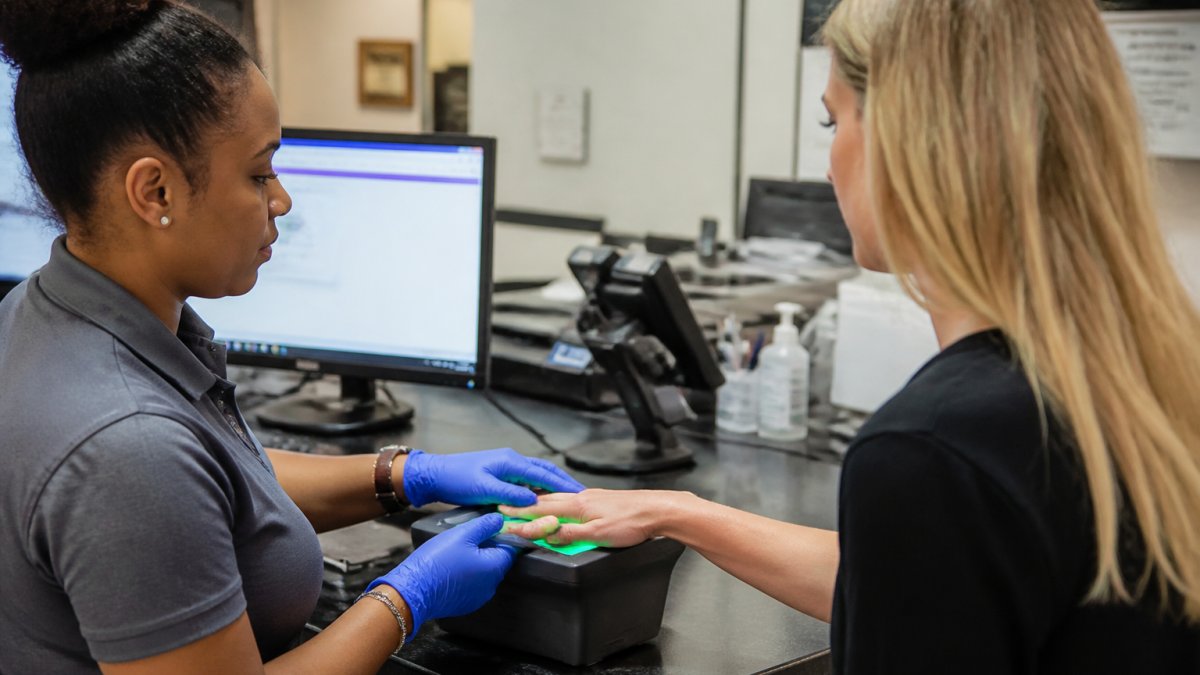
Ask the technician to re-scan before you leave if any print looks faint. Dry skin, recent hand lotion, and calluses are frequent culprits, and catching them at the counter costs minutes instead of days.
If your prints are rejected for quality and you resubmit without correcting the cause, you will repeat the delay. Fix the cause, hydration, clean hands, a different finger if a callus is the problem, before the second capture.
What actually drives the timeline
Three variables explain almost all of the variance applicants see:
- Submission format, digital clears the mailing leg entirely; ink cards do not.
- Print quality, a clean first capture avoids the rejection loop; a marginal one invites it.
- Requesting agency routing, some agencies batch results, some forward immediately, and some require the applicant to request the result separately. The agency’s process, not the FBI’s, often determines when you see anything.
If you are working against a hiring deadline, the highest-leverage move is confirming the agency’s accepted format and identifier before capture. Everything downstream depends on those two details.
FBI Background Check Requirements for Immigration Cases
For immigration, the FBI background check requirements tie directly to the application you are filing. U.S. Citizenship and Immigration Services often requires a fingerprint-based check as part of a broader screening, and results route through the agency handling your case rather than to you personally.
Key considerations for immigration applicants:
- The requesting agency, not you, usually receives the result
- An expired check may need to be rerun if your case runs long
- Name variations across documents can trigger additional verification
If you are applying for a visa or adjusting status, confirm with your attorney or the requesting office which fingerprint channel and identifier apply to your specific filing before scheduling a capture.
FBI Background Check for Professional Licensing and Employment
Professional licensing boards and employers pull the same underlying federal record but use it for different decisions. A licensing board verifies you meet a statutory standard for the credential. An employer weighs conviction records against the specific duties of the role. The legal framework around the employer’s use is where most applicants and HR teams get into trouble.
What the employer is actually required to do
When an employer uses a third-party screening company to run a background check, the Fair Credit Reporting Act (FCRA) governs the process. The mechanics matter more than the summary:
- Disclosure and authorization. The employer must give you a clear, standalone written disclosure that a background check may be obtained, and must get your written authorization before the check is run. Burying this in an application packet is a common compliance failure.
- Pre-adverse action notice. If the employer is inclined to deny you based on the report, it must first give you a copy of the report and a written summary of your FCRA rights. This is the pre-adverse action step, and it is not optional.
- A meaningful opportunity to respond. You get a window, commonly described as a reasonable period, and in practice often about five business days, to dispute the accuracy or completeness of what the report says before the employer finalizes the decision.
Skipping or compressing the pre-adverse action step is one of the most common FCRA violations, and the step that gives applicants their best chance to correct a record before a decision is final.
Individualized assessment and Fair Chance hiring
A conviction record is not supposed to be an automatic disqualifier. Under EEOC enforcement guidance, employers must conduct an individualized assessment weighing:
- The nature and gravity of the offense
- Time passed since the offense and completion of any sentence
- The offense’s relevance to the specific job duties
Blanket “no felons” policies run against this framework. Separately, many state and local jurisdictions have enacted Fair Chance (ban-the-box) laws that push the conviction inquiry later in hiring, often to after a conditional offer. These laws vary widely and layer on top of the federal framework rather than replacing it.
State requirements vs. federal
A federal Identity History Summary reflects records reported to the FBI and will not show a state-only charge never reported upward. That gap is why many employers run both federal and state or county checks, and why a clean federal summary is not the same as a clean record everywhere.
For licensing, the split matters differently: a state board may require a state-specific criminal history check in addition to, or instead of, the federal summary. Confirm which check the board actually requires before you schedule a capture.
A compliance checklist for HR teams
Because the FCRA steps are sequential and easy to compress under deadline pressure, an internal checklist is the simplest safeguard. At minimum, confirm each of the following before finalizing any adverse decision:
- Standalone disclosure provided and signed authorization on file
- Report reviewed for accuracy before any decision is made
- Pre-adverse action notice sent with a copy of the report and the FCRA rights summary
A conviction record does not automatically disqualify you. The assessment is supposed to be individualized, the pre-adverse action notice is mandatory, and you have a legal right to dispute errors before an adverse action is final.
Fixing Errors, Expungement, and Your Rights Under the FCRA
Errors on an FBI record are more common than most applicants expect, and you cannot fix what you cannot see.
Your correction path:
- Request your summary and read every entry carefully
- Identify inaccurate or incomplete conviction records
- Submit a challenge through the FBI’s process with supporting court documents
A growing debate concerns the “right to be forgotten,” the idea that old, non-relevant records should age out of routine screening.
FBI Identity History Summary Checks official page is the authoritative starting point for requesting and challenging your own record.
Conclusion: Your Next Steps for a Smooth FBI Background Check
The applicants who sail through confirm the requesting agency’s exact requirements before their fingerprints are captured. Getting that detail right eliminates most delays.
If you are in San Diego County and need a fingerprint-based check for employment, licensing, or immigration, San Diego Live Scan makes the process simple. We offer walk-ins all day with no appointment needed, free printing of Live Scan forms in-office, and five convenient locations.
Find a location near you and get your submission right the first time.
The complexity of FBI background check requirements in 2026 comes down to one thing: matching your submission method and identifier to what the requesting agency accepts.
Frequently Asked Questions
How long does the FBI take to process a fingerprint background check?
Electronic fingerprint submissions typically return an FBI Identity History Summary in a few days to two weeks, while ink-card submissions mailed to the FBI can take four to eight weeks. Processing time depends on submission method, accuracy of prints, and current volume. If your prints are rejected, you must resubmit, which adds time. For time-sensitive needs like employment onboarding, digital submission is the faster route.
Can I request my own FBI Identity History Summary?
Yes. You can request your own Identity History Summary online through the FBI’s approved channel, by mail, or at an authorized fingerprinting location. You will need a government-issued photo ID and fingerprints. The summary is for your personal review and is not automatically sent to employers or agencies. If you need it for immigration or licensing, follow that agency’s specific submission instructions.
What do I need to get an FBI background check?
You need a government-issued photo ID, a completed application, and fingerprints captured either digitally or on an ink card. For employment or licensing, your employer or agency may provide a service code or specific forms. If you are applying for immigration, follow USCIS instructions. Always verify the exact documents and fees required by the requesting agency before you submit.
Do I need an FBI background check for immigration or professional licensing?
Often yes. USCIS may require an FBI background check for visa, green card, or citizenship processes, and many state licensing boards require one for professions like nursing, teaching, or real estate. Requirements vary by agency and state. Check the specific instructions from USCIS or your licensing board, and ensure your fingerprints are submitted through the correct channel to avoid delays.
How can I correct an error on my FBI background check?
If your Identity History Summary contains incorrect or incomplete information, you can challenge it through the FBI’s process. You will need to submit a written request with supporting documents, such as court records or identification. The FBI will review and correct the record if warranted. For errors on a consumer report used for employment, you also have dispute rights under the Fair Credit Reporting Act.
What is the difference between an FBI background check and a state background check?
An FBI background check searches national criminal databases using fingerprints, while a state background check searches records within a specific state. Some employers require both. An FBI check is often needed for immigration, federal employment, or professional licensing. State checks may be faster and cheaper but do not cover offenses in other states. The right choice depends on the requesting agency’s rules.