Table of Contents
- Why Live Scan Services for Volunteers Are Required
- Volunteer Fingerprinting Requirements by Role
- The Volunteer Live Scan Application Form: What to Complete
- What to Bring to a Live Scan Appointment
- How Long Does Live Scan Take for Volunteers?
- What Happens If a Volunteer’s Fingerprints Are Rejected
- Choosing Live Scan Services for Volunteer Groups
- Conclusion
- Frequently Asked Questions
Last Updated: October 19, 2026
Why Live Scan Services for Volunteers Are Required
Live Scan services for volunteers exist because organizations that place people near children, patients, money, or private records carry real legal exposure. California law requires fingerprint-based background checks for many volunteer roles, and the results go to the state Department of Justice and the FBI. This guide from San Diego Live Scan explains what volunteers should expect.
The logic is simple. A school district, a youth sports league, or a hospice cannot vet every applicant from memory. Fingerprinting gives them a documented, state-verified record.
Here is what most volunteers get wrong: they assume the organization handles everything. In practice, you usually receive an agency-specific request form and you are responsible for showing up with it.
Never book a fingerprinting appointment before you have the requesting organization’s form or authorization code. Without it, the technician cannot route your prints to the right agency, and you may have to pay twice.
Volunteer Fingerprinting Requirements by Role
Requirements depend on the role, not the title. A volunteer who handles cash at a fundraiser faces different screening than one who drives a church van.
- Working with minors: School volunteers, coaches, and scout leaders usually need a full state and federal check.
- Healthcare and elder care: Hospital and hospice volunteers typically need a check plus a health clearance.
- Financial roles: Treasurers and board members who sign on accounts often need screening.
- One-time event help: Many groups skip fingerprinting for single-day, supervised roles.
A common mistake is assuming a cleared badge from one organization covers another. It usually does not. Each requesting agency runs its own authorization.
The Volunteer Live Scan Application Form: What to Complete
The volunteer Live Scan application form is the document that tells the technician where to send your results. Get it from the organization you are volunteering with, not from the fingerprinting office.
Expect these fields:
- Your full legal name, exactly as it appears on your ID
- Date of birth and contact details
- The requesting agency’s name and ORI code
- The level of service requested, usually state and FBI
- Your signature authorizing the check
Fill it out in black ink and double-check the ORI code. A wrong code sends results to the wrong agency and delays everything.
Ask the organization for the form by email and print it yourself, or ask us to print it free in-office. A clear, flat printout scans better than a crumpled copy from your glove box.
What to Bring to a Live Scan Appointment
Bring three things: a government-issued photo ID, the completed request form, and payment. That is the full list in most cases.
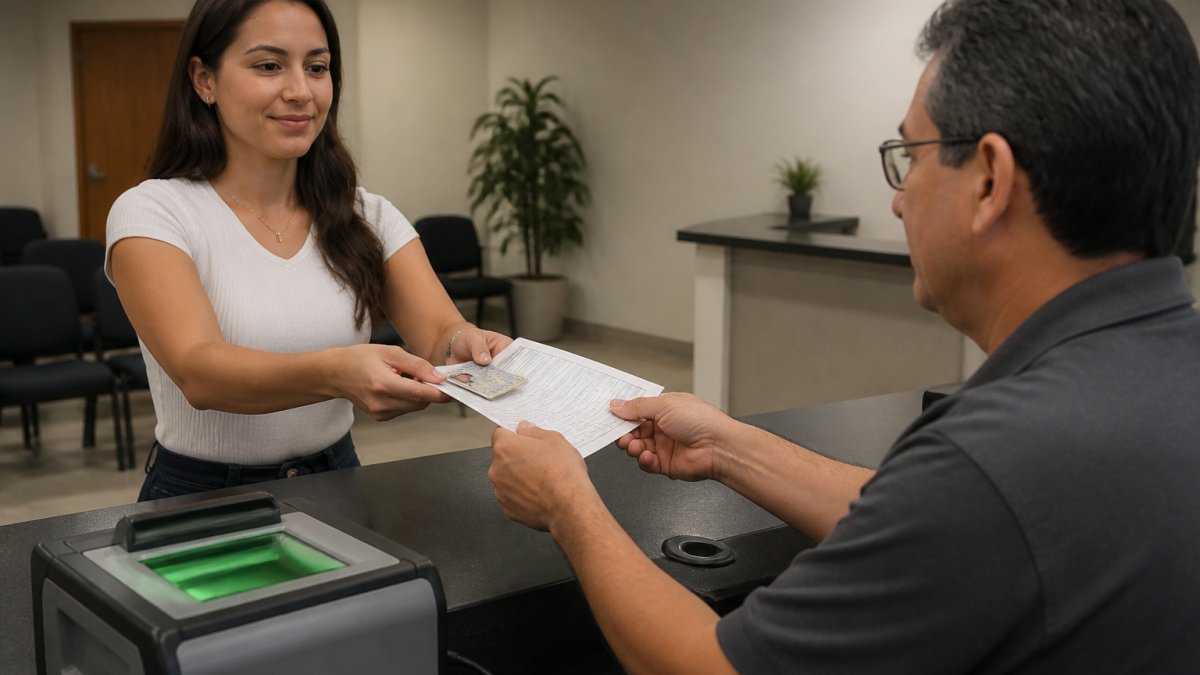
The ID must be current and unexpired. Common accepted forms include:
- A state driver’s license or ID card
- A passport
- A military ID
Some agencies also ask for proof of your volunteer status, such as a letter on letterhead. Check with your coordinator before you drive over.
How Long Does Live Scan Take for Volunteers?
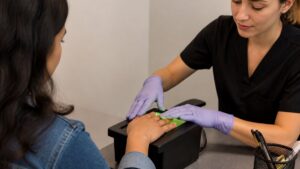
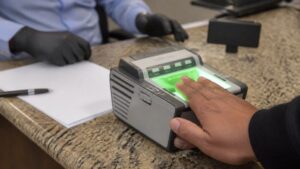
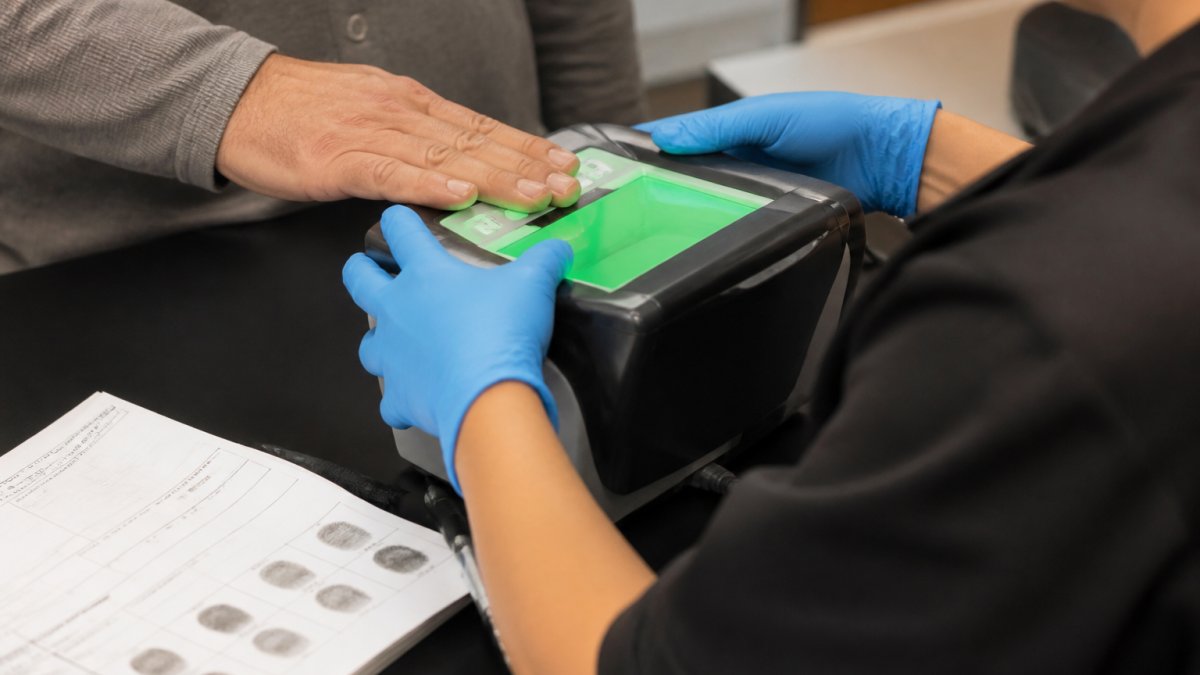
The scan itself takes about 10 to 15 minutes. The wait for results is the longer part, and it varies by agency.
Here is the rough picture:
- Scanning at the office: 10 to 15 minutes
- State review: often a few business days
- FBI review: can take longer if your prints need a second look
- Agency response: depends on how fast the requesting organization processes the file
Many volunteers hear back within a week or two. Some take longer. We tell people to plan for the range, not the best case, especially if a start date is close.
What Happens If a Volunteer’s Fingerprints Are Rejected
Rejection is common and rarely means trouble. Fingerprints get rejected when the scanner cannot read the ridges clearly, often because of dry skin, lotion, calluses, or worn ridges from manual work.
Most rejections are “quality” rejections. That means the prints were unreadable, not that a record was found. You simply return and rescan.
A few practical fixes:
- Moisturize your hands for a day or two before your appointment
- Skip hand lotion right before you arrive
- Clean and dry your fingers at the counter
- Tell the technician about calluses or scars
A rejection is a redo, not a red flag. Most volunteers who get rescaled pass on the second attempt without any further delay beyond the appointment itself.
Choosing Live Scan Services for Volunteer Groups
Groups have different needs than individuals. A youth league sending 30 coaches through screening needs a provider that can handle volume without turning it into a logistics project.
Look for these things:
- Walk-in availability: volunteers have day jobs and tight windows
- Multiple locations: a group spread across a county needs convenient options
- Form printing on site: one less thing for volunteers to forget
- Clear communication: someone who answers questions about ORI codes and timelines
At San Diego Live Scan, we have offered walk-in fingerprinting since 2010 from five locations, with no appointment needed and free printing of Live Scan forms in the office. We cannot promise a specific turnaround, because the state and FBI control that clock, but we can make sure your submission is clean the first time. That is where most delays start.
For group coordination, call ahead so we can plan for a wave of volunteers rather than a trickle.
Conclusion
Coordinating volunteer screening across a whole roster is the hard part. One missing form or wrong ORI code can stall a coach’s clearance for weeks.
San Diego Live Scan makes that piece easier with walk-in service at five locations, free in-office form printing, and a team that has handled volunteer and employment fingerprinting since 2010. Send your volunteers in when it fits their schedule, and we will handle the rest.
Find a location and get your group started.
Frequently Asked Questions
Do volunteers really need Live Scan fingerprinting?
In many cases, yes. Volunteer roles that involve children, vulnerable adults, healthcare settings, or school campuses often trigger a fingerprint background check under state or organizational policy. The exact volunteer fingerprinting requirements depend on the role and the sponsoring agency. Before you book, ask the organization for the specific requirement and any agency-issued request form. If they confirm Live Scan is needed, bring your ID and the form to a walk-in location.
How much does Live Scan cost for volunteers?
Pricing depends on the agency requesting the check, the level of service, and any rolling fees that apply. Some volunteer organizations cover the cost, while others ask the volunteer to pay. Because fees vary by request type and location, ask the sponsoring organization what they cover and check with the Live Scan provider for current pricing before your appointment. Do not assume a quoted price from one agency applies to another.
Can volunteers use any Live Scan provider?
Not always. Some agencies require the applicant to use a specific Live Scan location or request form. In most cases, you can choose a certified provider that offers walk-in service, but confirm with the requesting organization first. A provider that handles volunteer Live Scan application forms and prints them in-office can save you a trip. If the agency supplies a form, bring it; if not, ask the provider whether they can print the correct form for you.
What happens if a volunteer’s fingerprints are rejected?
Rejection usually means the scanner could not capture clear prints, often because of dry skin, calluses, or lotion residue. The provider will typically re-scan at no extra charge or instruct you to return. To reduce the risk, clean and dry your hands before the appointment and avoid hand lotion that day. If a rejection notice arrives later, contact the provider and the requesting agency to arrange a reprint. Ask about their policy for reprints before you book.