Table of Contents
- Group Fingerprinting Services for Businesses: What You’re Actually Buying
- On-Site, Live Scan, and Card-Based Options Compared
- On-Site Group Fingerprinting Services: How Mobile Teams Work
- How to Schedule Group Fingerprinting Without Stalling Your Hiring
- The Fingerprint Background Check Process, Step by Step
- Employee Fingerprinting Requirements: Forms, IDs, and State Rules
- What Group Fingerprinting Costs and How Volume Pricing Works
- How to Choose a Group Fingerprinting Provider
- Conclusion
- Frequently Asked Questions
Last Updated: October 21, 2026
Group Fingerprinting Services for Businesses: What You’re Actually Buying
Group fingerprinting services for businesses are vendor-run programs that capture fingerprints for multiple employees or applicants in one coordinated session, either at a fixed location or on-site at your workplace. At San Diego Live Scan, we have handled employer and organizational fingerprinting since 2010, and we can tell you the buying decision is rarely about the ink. It is about scheduling, form accuracy, and how fast results come back. Below, we break down what each service type actually delivers so you can pick correctly the first time.
The core distinction is simple: fixed-site Live Scan, mobile on-site teams, and card-based capture solve three different problems. Most employers buy the wrong one because the sales pages look identical.
On-Site, Live Scan, and Card-Based Options Compared
The right format depends on how many people you’re printing, where they’re located, and which agency needs the record. Here is how the three main options stack up.
- Live Scan (electronic): Fingerprints transmit digitally to the state repository or FBI, usually the fastest path and the one most state licensing agencies require.
- On-site mobile fingerprinting: A technician brings equipment to your building and processes a group in one block of time.
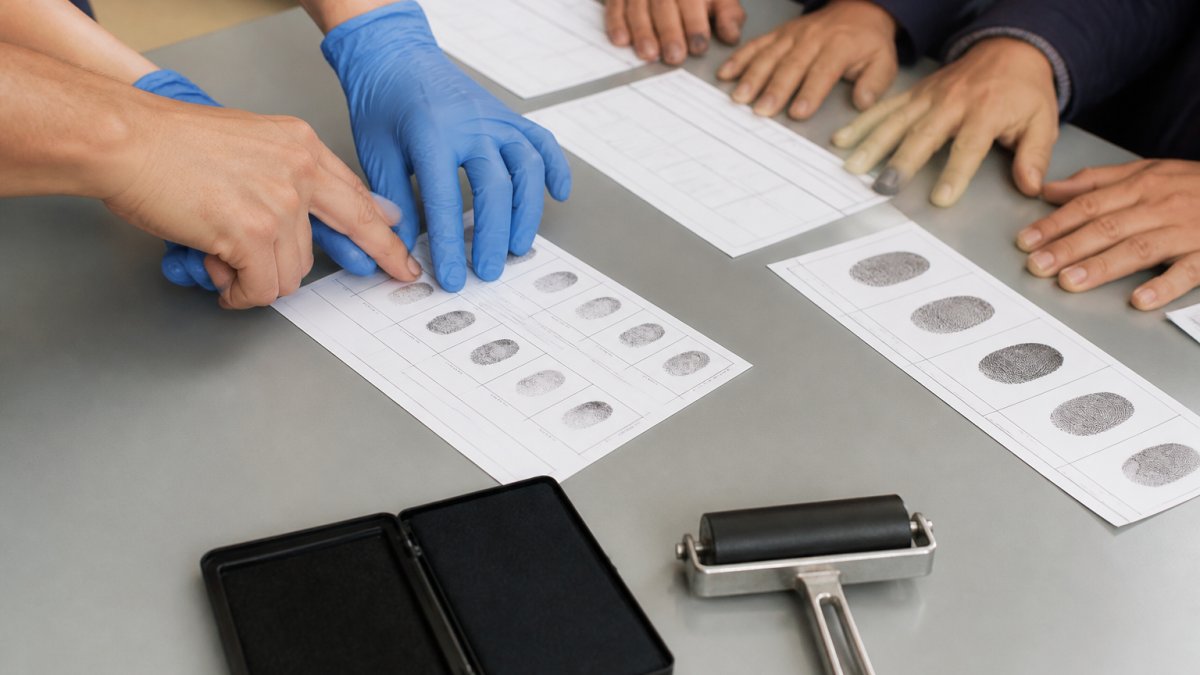
- Fingerprint cards (FD-258): Ink-and-roll or printed cards, still required by some agencies and out-of-state licensing boards.
| Option | Best For | Turnaround | Group Fit |
|---|---|---|---|
| Live Scan | Employment checks, state licensing | Fastest, electronic submission | Good at fixed sites |
| On-site mobile | 10+ employees, single location | Depends on vendor scheduling | Best for large groups |
| FD-258 cards | Out-of-state or agency-specific needs | Slower, mailed processing | Workable but manual |
Choose the format the receiving agency accepts first, then optimize for speed. A rejected submission costs more time than a slightly slower approved one.
On-Site Group Fingerprinting Services: How Mobile Teams Work
On-site group fingerprinting services bring a trained technician and portable capture equipment to your location, so your team never leaves the building. A typical mobile visit handles a scheduled block of employees in one session, with each person’s identity verified and prints captured electronically or on cards.
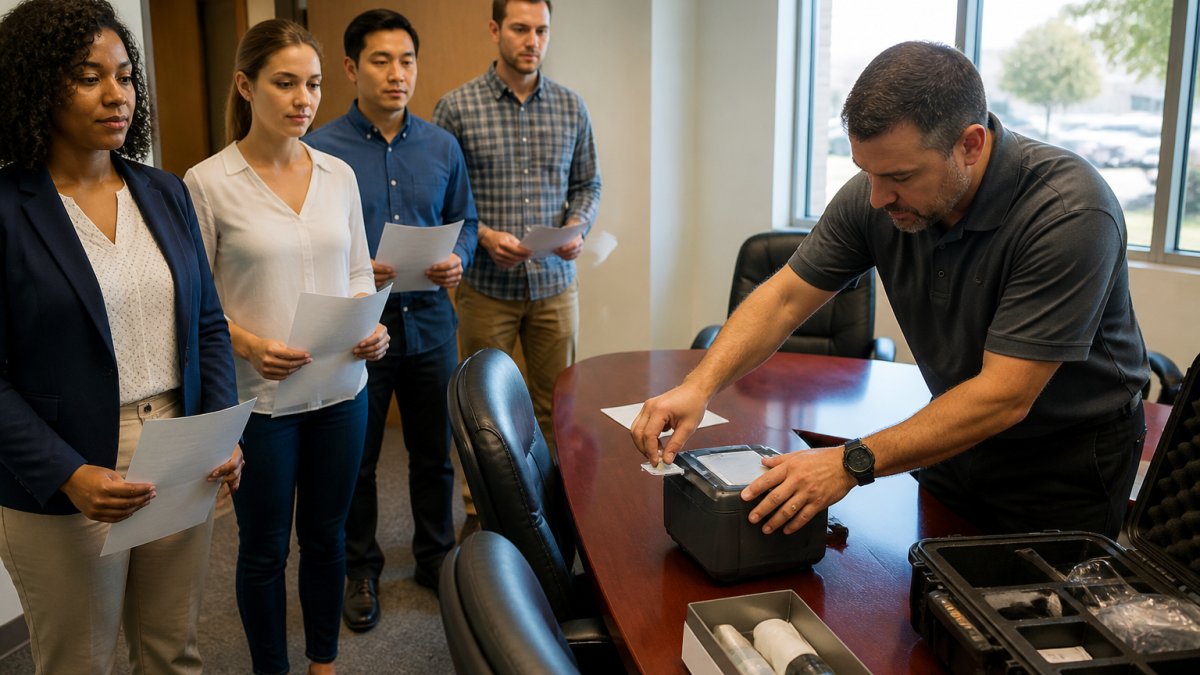
The logistics matter more than the hardware. You need a private room with a table, power, and reliable internet for electronic capture. Confirm the vendor carries liability coverage and is authorized for the submission type you need.
For employers with staff spread across multiple sites, mobile service can be scheduled site by site, but plan the sequence around your onboarding dates rather than convenience.
How to Schedule Group Fingerprinting Without Stalling Your Hiring
Scheduling a group session is a throughput problem, not a calendar problem. The goal is to move a large number of people through capture with minimal time away from work and zero rejected submissions.
Estimate throughput before you book.
Capture time per person depends on the method. Electronic Live Scan is typically faster per person than ink-and-roll cards because there is no card handling or drying.
Plan the space and staffing you must supply.
For an on-site visit, the vendor brings the equipment but you supply the environment. A workable setup usually includes:
- A private room with a door, so identity documents and prints are not captured in a public area
- A table at standing or seated height for the capture device
- Power access and, for electronic capture, reliable internet
- A waiting area outside the capture room so the line does not crowd the equipment
- One staff member from your team to check people in, verify they have the right form and ID, and keep the queue moving
That check-in role matters more than it sounds.
Sequence the group to minimize downtime.
Stagger arrival times in blocks rather than calling everyone at once.
Build the pre-session packet.
Hand every participant the same packet with the offer letter, not the day before the session:
- The exact agency form or authorization code required for their role
- An ID checklist naming the accepted documents
- The vendor’s address or the on-site arrival time and room
- Whether the applicant or the employer pays the agency fee
Collect completed forms the day before the session so your check-in coordinator can flag problems while there is still time to fix them.
Handle the last-minute hire.
Walk-in availability covers the candidate who starts sooner than expected.
Book the session before the candidate accepts the offer, not after. That single sequencing change prevents the most common onboarding delay in group hiring.
Track submissions after the session.
Scheduling does not end when the last print is captured. Keep a simple log of who was printed, the submission date, and the expected response window, and follow up on any rejection immediately.
The Fingerprint Background Check Process, Step by Step
The fingerprint background check process moves through four stages: capture, submission, agency review, and response. Understanding each stage tells you where delays actually happen.
Capture is where quality is decided. A clean print the first time avoids the resubmission loop that adds days or weeks. Submission routes the record electronically to the state repository or the FBI, depending on the check. Agency review is outside your control and outside the vendor’s. Response returns to the requesting agency or employer.
The FBI’s guide to submitting fingerprints for a background check explains that rejected prints must be resubmitted, which is why capture quality matters so much. Ask any vendor how they prevent rejections, not just how fast they submit.
Employee Fingerprinting Requirements: Forms, IDs, and State Rules
Employee fingerprinting requirements vary by state and by the agency requesting the check, so confirm the specifics before your session. Most employees need government-issued photo identification, and many submissions require a specific request form or authorization number.
Common requirements include:
- Government-issued photo ID, unexpired
- The agency-specific request form or authorization code
- Correct submission type for the role or license
- Any fee payment required by the requesting agency
State rules differ widely. Some licensing boards mandate electronic Live Scan, while others still accept FD-258 cards. Check the FBI’s Identity History Summary Checks page for federal checks and the relevant state agency for state-level requirements. Getting the form wrong is the most common reason a group session has to be repeated.
What Group Fingerprinting Costs and How Volume Pricing Works
Group fingerprinting pricing is not a single number. Every quote is built from four separate line items, and vendors differ mainly in which ones they show you and which ones they bury. If you understand the four components, you can compare any two quotes apples to apples.
The four cost components:
- Capture fee, the vendor’s charge for rolling or scanning each person’s prints. This is the number vendors advertise and the one that shrinks fastest with volume.
- Agency processing fee, the state repository or FBI fee for running the check. This is a pass-through cost set by the agency, not the vendor, and it does not discount with volume. Some vendors collect it; some have you pay it directly.
- Travel or mobilization charge, for on-site service, the cost of sending a technician and equipment to your building. Often a flat trip fee plus an hourly rate after a set window.
- Reprint and resubmission fee, what you pay when a print is rejected and must be captured again. Some vendors waive this if the reprint happens during the same visit; others bill it as a new capture.
How volume pricing actually works.
Volume discounts apply almost exclusively to the capture fee, because that is the only component the vendor controls.
What to put in the quote request.
To get comparable numbers, send every vendor the same five facts:
- Headcount and whether it is a one-time group or recurring onboarding
- Submission type (Live Scan, FD-258 cards, or both)
- Whether service is at your site or their location
- Your target date and any hard start-date deadline
- Whether the agency fee is paid by the employer or the applicant
A low per-person quote that excludes the agency fee and the reprint charge is not cheaper, it is incomplete. Ask for the all-in figure per employee, including agency fees and one reprint, before you compare vendors.
Questions that expose hidden costs:
- Is the state or FBI fee included or billed separately, and at what amount?
- Does the per-person price change at a headcount threshold, and where is the break?
- Is there a flat travel fee, an hourly rate, or both for on-site service?
- Is there a minimum session charge even if fewer people show up?
- Are reprints free during the same visit, and what does a return trip cost?
- Are forms printed free, or is there a per-form charge?
- What is the cancellation or reschedule policy if your start dates move?
Because agency fees are set by the receiving agency and travel costs depend on distance and session length, most vendors quote each group individually rather than publish a flat rate. That is reasonable, but a credible quote still itemizes the four components above so you can see exactly what you are paying for and where the volume discount is applied.
How to Choose a Group Fingerprinting Provider
Choosing a provider comes down to authorization, accuracy, and logistics. A licensed, insured vendor who is authorized for your submission type will save you more time than one advertising the lowest rate.
Use this checklist:
- Authorized for the submission type you need
- Licensed and insured
- Clear all-in pricing with volume tiers
- Free form printing or clear form guidance
- Walk-in or flexible scheduling
- Documented process for rejected prints
- Multiple locations or mobile coverage
- Responsive support for group coordination
At San Diego Live Scan, we print Live Scan forms free in-office and welcome walk-ins at five locations, which keeps small and mid-size employers moving. For groups, call ahead so we can plan the session around your start dates.
Conclusion
Coordinating fingerprinting for a group is where most hiring timelines quietly break, usually over a wrong form or a rejected print. Match the format to the agency’s requirement, book before the offer closes, and confirm what the quote actually covers. San Diego Live Scan offers walk-in availability, free in-office form printing, and five convenient locations to keep your onboarding on schedule. Find a location and get your group moving.
Frequently Asked Questions
Can a fingerprinting provider come to our business location?
Yes. On-site group fingerprinting services bring electronic capture equipment and a trained technician to your office, warehouse, or campus, so employees never leave the building. This works best for groups of roughly 10 or more people, since setup time is spread across the whole group. Mobile teams typically handle electronic fingerprint capture for Live Scan submissions or print FD-258 fingerprint cards, depending on what your state and the requesting agency accept. Ask the provider how far in advance you need to book and whether they carry a mobile printer for cards.
How do employers arrange fingerprinting for multiple employees?
Start by confirming which background check each role requires, since employee fingerprinting requirements differ by state and by the agency requesting the check. Collect full legal names, dates of birth, and the required forms or codes before booking. Then contact a licensed vendor with your group size, preferred date, and whether you need on-site service or walk-in appointments at a service location. A good provider will confirm which identification documents each employee must bring and send a checklist you can circulate internally.
How long does group fingerprinting take for employees?
Electronic fingerprint capture itself takes only a few minutes per person once the technician is set up, so a group of 20 employees is usually handled in a single morning or afternoon block. The longer wait is on the result side. Live Scan submissions are typically transmitted electronically to the state and FBI within hours, but the background check turnaround depends on the requesting agency. Ask your provider about their rejection rate and whether they reprint at no charge, because a rejected print adds days to the timeline.
What should a business look for in a fingerprinting provider?
Check four things: licensing and certification for the specific checks you need, experience with groups rather than single walk-ins, clear billing options such as net-30 invoicing for business accounts, and a stated policy on reprints and rejected prints. Ask how they handle secure processing of applicant data and whether they can coordinate multiple sites. A provider that answers these questions in writing, and that offers both on-site group fingerprinting services and fixed locations, is easier to rely on when hiring volume spikes.